Serving Maricopa, AZ and surrounding areas. (520) 217-7297
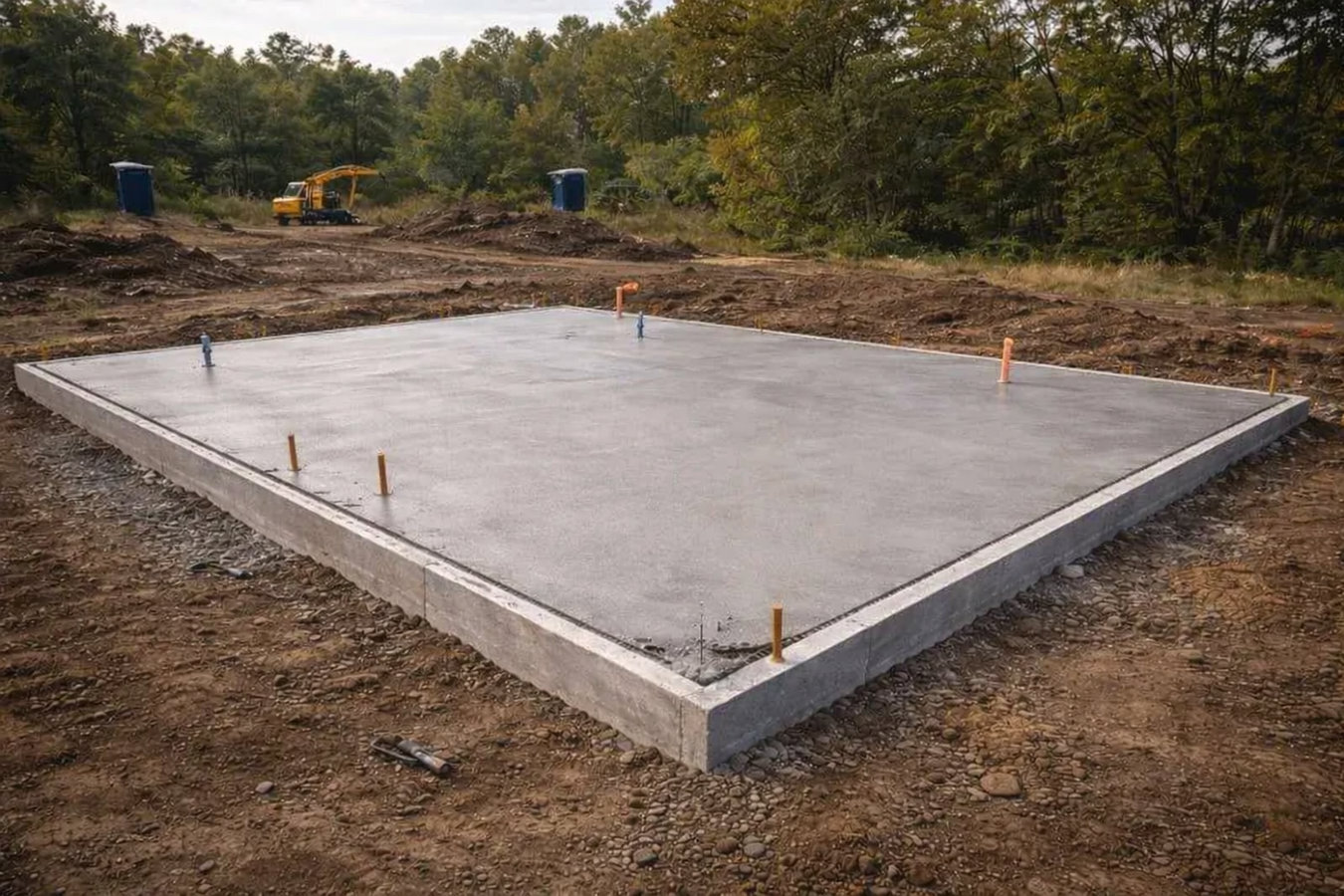
Your foundation is the most important concrete on your property. We build slab foundations in Maricopa that account for caliche soil, desert heat, and monsoon drainage - with every pour permitted and inspected.
Slab foundation building in Maricopa means pouring a thick, reinforced concrete pad that becomes both the floor and structural base of your home or structure - most standard residential slabs take one to two weeks of active work, followed by a curing period before framing begins.
In Maricopa, where the soil under many lots contains caliche - a rock-hard calcium carbonate layer - and clay that swells and shrinks with moisture, the preparation work before the pour matters just as much as the concrete itself. A slab poured on improperly prepared ground will crack and settle, often within a few years. Many homeowners also look at foundation installation alongside a slab build when they are starting a full new construction project and want a contractor handling every stage from ground prep to finished pad.
The City of Maricopa requires a building permit and city inspection before any concrete is poured on a new foundation. That inspection - done by an independent city official - is one of the best protections a homeowner has. We handle the permit application and coordinate the inspection so you do not have to navigate that process yourself.
The most straightforward reason to call is that you are starting from scratch - a new home, a detached garage, a casita, or an accessory dwelling unit. In Maricopa, where many lots in master-planned communities are still being developed, this is the most common reason homeowners reach out. If you have a lot and a building plan, a slab foundation is almost certainly what comes next.
Small hairline cracks in concrete are normal. But if you notice cracks wider than a credit card's thickness, cracks running diagonally from door frame corners, or cracks where one side sits higher than the other, the slab has moved. In Maricopa, this kind of movement is often linked to the expansive soils or caliche layers common in this area shifting after a wet monsoon season.
When a slab shifts or settles unevenly, the walls and frames above it move too - even slightly. If doors that used to swing freely are now sticking, or gaps are forming at the tops of door frames, the problem may be starting at the foundation level. This is worth having a professional assess before the movement gets worse and more expensive to correct.
If water consistently pools against your home after monsoon storms, that is a warning sign. Over time, water that sits against a slab can work its way underneath, erode the soil base, and cause settling. Maricopa's monsoons can drop heavy rain quickly, and a slab that was not properly graded from the start will show it every rainy season.
Every slab foundation project we take on starts with the ground - not the concrete truck. We assess the soil conditions on your specific lot, check for caliche, and prepare the base with proper grading, compaction, and a gravel drainage layer before any forms are set. Plumbing lines that run under the slab are installed at this stage too, because once the concrete is down they cannot be reached without cutting through it. Steel reinforcing rods go into every slab we pour - the internal strength that keeps the concrete from cracking if the soil shifts. Homeowners who are planning a complete new build often combine slab foundation work with concrete footings that anchor walls, posts, and structural loads at specific points across the pad.
We handle the permit application with the City of Maricopa Building Safety Division and coordinate the pre-pour inspection with the city inspector. You will know when each step is happening and why. After the pour, we take active steps to protect the surface during curing - covering it and keeping moisture in - because in Maricopa summer heat, an unprotected slab can crack before it ever reaches full strength. We also grade the finished slab elevation so water drains away from the structure, not toward it, which matters every monsoon season for the life of the building.
Designed for homeowners starting from a bare lot - includes site assessment, full prep, permitted pour, and city inspection coordination.
Suits detached garages, casitas, ADUs, and workshops - properly tied to existing grade and drained away from the main structure.
For homeowners expanding their footprint - new slab sections that connect correctly to the existing foundation and match its elevation.
Thinner pads for covered patios and outdoor living areas, graded for surface drainage and finished for outdoor use.
Maricopa is one of the fastest-growing cities in Arizona, and much of that growth happened rapidly - during the early 2000s building boom, homes went up quickly across large master-planned subdivisions. That speed sometimes meant less attention to site-specific soil prep. Caliche layers in Pinal County are common and vary in depth from lot to lot - some sites have a hard caliche layer just a few inches down, others have several feet of workable soil above it. A contractor who has poured slabs in Maricopa before knows to check, and knows how to break through it when needed. The City of Maricopa Building Safety Division actively enforces permit and inspection requirements, and permit timelines can stretch during busy construction seasons - starting the permit process early is part of running these jobs right.
We serve homeowners across the region, including slab projects in Casa Grande and Chandler. Monsoon season - which runs from mid-June through September - creates a narrow window for ideal foundation work, because sudden heavy rains can saturate freshly compacted ground and delay a pour by days. We schedule around the season and protect prepared sites between stages when weather is a factor.
You reach out and we ask a few basic questions - the size of the structure, your lot address, and whether you have building plans. We schedule a site visit before giving you a firm price, because soil conditions and prep needs vary significantly from lot to lot. You will have a written, itemized estimate within one business day of the visit.
We apply for the building permit with the City of Maricopa on your behalf - you do not need to navigate city offices yourself. Permit approval typically takes one to three weeks depending on current city workload. During this time we review your lot's soil and grading situation so we are ready to move the day the permit clears.
Once the permit is approved, we grade the site, compact the soil, break through caliche if present, lay the gravel base, and run underslab plumbing. A city inspector visits before any concrete is poured to verify the forms, steel, and plumbing are all correctly in place. We coordinate the inspection - you just need to know it is happening.
The concrete pour happens in a single day - early morning in summer to manage heat. After the pour, we protect the surface during the curing period and walk you through when framing can begin. We hand you the permit documentation, inspection record, and warranty terms before we leave the site.
No obligation, no pressure. We will visit your site, assess the soil, and give you a written quote - so you know exactly what your Maricopa foundation project will cost before any work begins.
(520) 217-7297We apply for the City of Maricopa building permit before any work begins and coordinate the required pre-pour city inspection. That inspection means an independent official confirms the prep work is correct before a single yard of concrete is placed. You get documentation of every step.
Caliche is present under a large share of lots in Maricopa and the surrounding Pinal County area, and it affects how every foundation behaves over time. We check for it on every project and factor removal into the estimate upfront - so there are no surprises once digging starts.
Pouring concrete when temperatures are above 100 degrees without a heat management plan is one of the fastest ways to end up with a cracked slab. We schedule summer pours for early morning, use mixes rated for hot weather, and protect the surface during curing. The{' '}Portland Cement Association recommends specific hot-weather concreting practices that we follow on every warm-weather pour.
Your written estimate covers site prep, materials, permit fees, and labor - with a clear explanation of what could change and why. In a market where foundation quotes can vary widely, having an itemized breakdown lets you compare honestly and make a confident decision without guessing.
Every slab we pour in Maricopa gets the same level of attention - whether it is a 400-square-foot garage pad or a 2,500-square-foot home foundation. You can verify our Arizona Registrar of Contractors license at roc.az.gov before you sign anything - a legitimate contractor will always invite you to check.
The City of Maricopa Building Safety Division publishes permit requirements and inspection schedules for all new foundation work. The Portland Cement Association is the primary technical resource for slab construction standards and hot-weather curing practices.
For new home builds or major additions that need a complete foundation system installed from the ground up with permits and inspections.
Learn moreFootings anchor walls, posts, and structures to your slab - an essential complement to any new foundation build.
Learn moreFall and winter slots fill fast - locking in your start date now means your project stays on schedule and avoids the heat and monsoon delays of summer.